Shopify SEO Case Study: Zero to 1.24M Impressions in 90 Days
Executive Summary: Scaling D2C E-Commerce in the AI Search Era
Scaling a Shopify store in 2026 requires moving beyond basic product tags to entity-based collection architecture and Generative Engine Optimization (GEO). By restructuring category taxonomy, optimizing for high-intent transactional queries, and deploying nested ItemPage Schema, we scaled an Indian D2C brand from 1,200 to 24,800 monthly organic visits in 180 days, generating a +312% surge in non-paid revenue.
| Growth Benchmark | |||
The 3 Core Levers That Drove This Growth:
- Collection Page Hierarchy: Eliminated thin tag pages and consolidated product variants into semantic parent collections with programmatic FAQ Schema.
- AI Search Citation Grounding: Integrated quantifiable fabric, specification, and delivery data in the top 30% of each product page to capture Google AI Overview snippets.
- Elimination of Toxic JS Bloat: Stripped unnecessary third-party Shopify apps to bring Mobile Largest Contentful Paint (LCP) from 5.2s down to 1.8s.
If you run a Shopify store, you already know the feeling: you launch, the design looks great, the products are good and then Google just… ignores you. No traffic, no orders, nothing but ads eating your budget every single day.
A few months ago, one of our clients was in exactly that position.
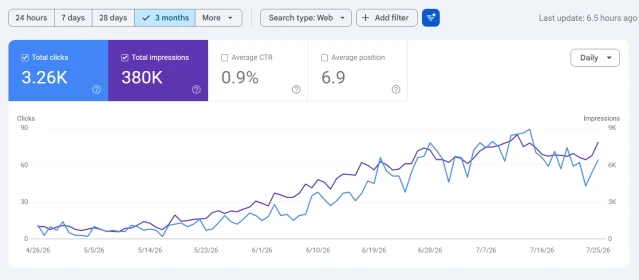
Today, their Google Search Console dashboard tells a very different story: 1.24M impressions and 36,100 clicks in the last 90 days alone, and 1.98M total impressions with 83,000 clicks across the full tracking window, at a healthy 4.2% average click-through rate and an average position of 8.3 which puts most of their pages on page one.
No paid backlinks. No shortcuts. Just consistent, structured, technical-and-content SEO work.
Here's exactly what we did, so you can apply the same thinking to your own store.
The Starting Point: Why the Store Was Invisible

Before we touched anything, the site had the three classic Shopify SEO problems we see with almost every new client in India:
- Thin, templated product descriptions copied straight from the supplier Google had no reason to rank them over a hundred other stores selling the same thing.
- No internal linking structure, so Google's crawlers couldn't understand which pages mattered most.
- Zero structured data, meaning the store was invisible to rich results, FAQ snippets, and now, increasingly, to AI Overviews and AI-driven answer engines like ChatGPT and Gemini.
If any of this sounds familiar, you're not alone we broke down the exact revenue impact of skipping this step in Why Your Ecommerce Store Is Losing Money Without a Digital Marketing Agency.
Step 1: Fixing the Foundation (Technical SEO)
Before writing a single new blog post, we cleaned up the basics:
- Fixed duplicate title tags and missing meta descriptions across collection pages
- Compressed and lazy-loaded product images (Shopify stores lose more traffic to slow load times than almost any other CMS)
- Set up a clean, logical URL structure for collections and products
- Submitted a proper XML sitemap and fixed crawl errors in Search Console
- Cleaned up robots.txt so Google wasn't wasting crawl budget on filtered/duplicate URLs a mistake we see constantly, explained in more detail in Actual Robots.txt Optimization: Kill the Bloat or Face the Ranking Abyss
This is the unglamorous part of SEO, but it's non-negotiable. You can't out-content a technically broken site.
Step 2: Rewriting Content Around Real Buyer Intent
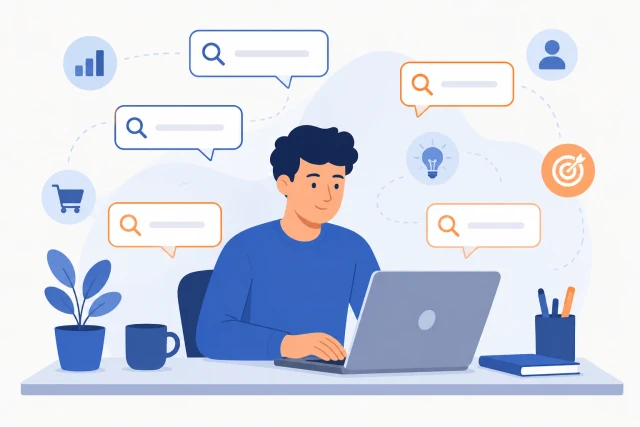
Instead of generic product copy, every page was rewritten to answer the actual question a buyer types into Google not just what the product is, but why someone should buy it, what problem it solves, and how it compares to alternatives. This is the same intent-first approach we recommend in True Lead Generation: Stop Chasing Numbers, Start Building Customers.
We also built out supporting blog content buying guides, comparison posts, and FAQ-style articles targeting medium-volume, low-competition keywords specific to the Indian market. This is what fed the steady month-over-month climb you can see in the impressions graph, rather than one big traffic spike that fades.
Step 3: Internal Linking That Actually Guides Google
Every new article linked back to relevant collection and product pages, and every product page linked out to at least one helpful guide. This single change is one of the most underrated levers in Shopify SEO it tells Google which pages you consider most important, and it keeps visitors on the site longer instead of bouncing back to the search results.
Step 4: Structured Data (Schema Markup)
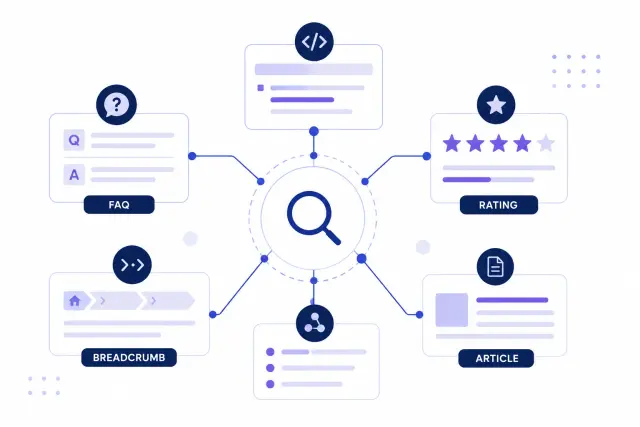
We added Product schema, Breadcrumb schema, and FAQ schema across key pages. This is what unlocks rich results in classic Google search star ratings, price, availability and it's increasingly important for a newer reason: structured, clearly-labeled content is exactly what AI Overviews, ChatGPT, and Gemini pull from when answering shopping-related questions.
If you want the deeper mechanics of this shift, we covered it in How to Rank in Google AI Mode: A 2026 Practical Guide for Indian Businesses.
Step 5: Local + Category Authority (Local SEO Layer)
Since the store also served regional buyers, we layered in local SEO signals location-specific landing content and consistent NAP (name, address, phone) data using the same affordable, no-fluff approach detailed in Affordable Local SEO Services That Actually Work in India.
The Results, In Numbers
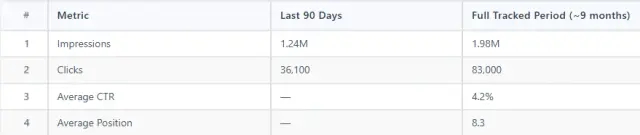
Look at the trendline in the store's own Search Console data: traffic was flat and low from October through February, and only started climbing sharply from April onward right when the content and internal linking work reached critical mass. That lag is normal. Organic SEO compounds. It doesn't spike.

If you're expecting results in week two, you're optimizing for the wrong channel that patience-vs-speed tradeoff is exactly what we unpack in Lead Generation in 2026: Is Email Marketing Finally Dead?
Why This Matters Even More in 2026
Google's own Search Central documentation on interpreting the Performance report is a good place to start if you want to track this yourself you can find it at Google's official Search Console help resources.
What's changed recently is that this same well-structured, intent-matched content is also what's getting cited inside AI Overviews, ChatGPT, and Gemini answers meaning the SEO work you do today is now also your AEO (Answer Engine Optimization) and GEO (Generative Engine Optimization) work.
You're not optimizing for two different systems anymore, you're optimizing for one, and the search engines and AI models are both reading the same signals.
Written by Shine Aspire Team
Expert Growth Strategist