Shine Aspire:The 2026 Digital Growth Streategy
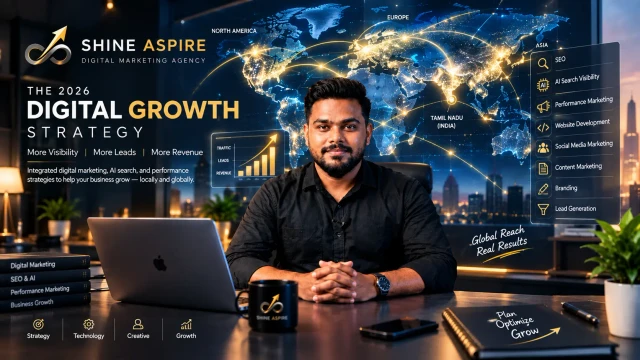
Getting customers online is no longer as simple as ranking on Google or posting regularly on media.
A potential customer might first find a business through Google Search then visit its website. They could see an Instagram post watch a YouTube video read a blog compare competitors and even ask an AI platform about the company before deciding to make contact.
This means businesses need more than individual marketing efforts. They need a digital marketing strategy that brings together search content social media advertising websites branding AI search and lead generation.
For startups and growing businesses the real question is no longer:
“How can we rank higher on Google?"
 That’s where an expertise digital marketing agency can help create a growth system.
At Shine Aspire our approach combines SEO, AI-search visibility performance marketing website development social media content branding and online promotion to help businesses build a digital presence.
Why Search Visibility Matters More in 2026
Search behaviour has changed significantly. People are not always searching with keywords anymore. They use questions specific problems locations product requirements and conversational searches.
At the time AI-powered search experiences are changing how people discover and evaluate businesses. Traditional SEO still matters. A website needs a sound structure useful content relevant keywords good user experience and authority.
Businesses now need to think beyond one search engine.
Your potential customer could discover your company through:
• Google Search
• Google Maps
• Social media
• YouTube
• Business directories
• Industry websites
• Blogs
• Online reviews
• AI-powered search platforms
• Recommendations and brand mentions
The goal is therefore not simply to rank for a keyword. The goal is to build top ranking visibility across the customer journey.
Why Businesses Invest in Marketing but Still Struggle to Generate Leads
One problem is that different marketing activities are managed separately. For example a business may invest in Google Ads. Send visitors to a unprofessional landing page. Another company may publish blogs every month. Target topics that attract people who are unlikely to become customers. A business may have thousands of social media followers but no clear conversion strategy. Another may have a website that does not explain its services or provide an obvious next step.
The individual activities are not necessarily bad. The problem is the lack of connection between them.
A stronger digital marketing system might look like this:
SEO → traffic → Useful content → Website trust → Enquiry → Follow-up → Customer
Paid advertising can add another route:
Advertisement → Landing page → Lead → Sales follow-up → Customer
Social media can support the process by keeping the brand visible and demonstrating expertise. Analytics then helps the business understand which activities are actually producing results. This is why choosing a marketing agency should not be about simply buying a list of services. The important question is whether those services work together around a clear business objective.
A Practical Digital Marketing Strategy for Businesses in 2026
Every company has customers, competition, budgets and goals. A local business does not need the same strategy as an e-commerce company. A SaaS startup will have requirements from a college or educational business. A B2B company may need a content and lead-generation process from a consumer brand. Still several important areas form the foundation of a digital growth strategy.
1. Understand Your Customer Before Choosing Keywords
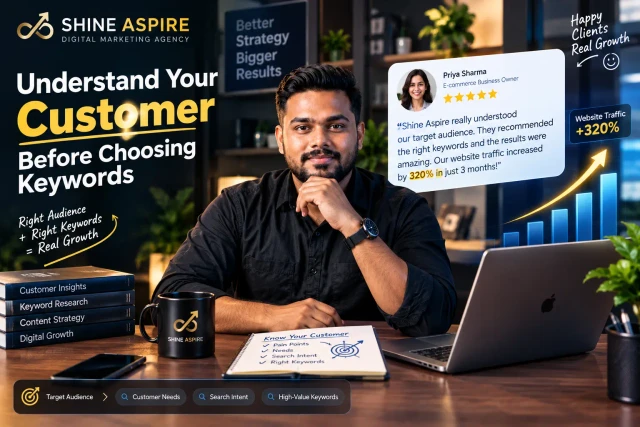
Keyword research is important but starting with keywords can lead to the wrong strategy. Start with the customer.
Ask:
• What problem are they trying to solve?
• What questions do they ask before buying?
• What services are they comparing?
• What makes them hesitate?
• What information do they need before contacting a company?
• What makes them trust one provider over another?
• What location do they search from?
Consider these two searches:
“ marketing"
ad
“digital marketing agency for startups in Tamil Nadu"
The first search is broad and could come from someone researching the subject. The second has a clearer commercial intent. A professional SEO strategy should understand these differences. Create content for step by step stages of the buyer journey.
This is where commercial keyword research search intent analysis local SEO and competitor research become valuable.
2. Build a Technically Strong Website
content cannot compensate for a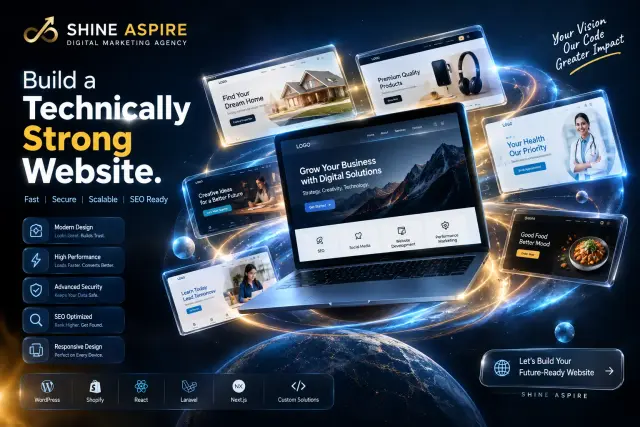 website with serious technical problems. Search engines need to crawl understand and index your website properly. Visitors also expect websites to work smoothly across desktop devices.
Important technical SEO areas include:
• Website architecture
• Crawlability
• Indexing
• Mobile usability
• Page performance
• linking
• XML sitemap
• Canonicalisation
• HTTPS
• Redirects
• Broken links
• data
• Duplicate content
• Image optimisation
• Core Web Vitals and other performance considerations
A technical SEO audit can identify problems that may not be obvious to business owners. Fixing the foundation gives other marketing activities a stronger platform to work from.
3. Create Content Around Real Customer Problems
Publishing content to increase the number of blog posts is not an effective content strategy.
The better question is:
“Does this content help the customer make a decision?"
Useful content can:
• Answer common questions
• Explain complicated subjects
• Compare solutions
• Demonstrate expertise
• Solve customer problems
• Explain products or services
• Share practical experience
• Help buyers evaluate their options
For a digital marketing agency relevant topics could include:
• SEO strategies for startups
• local businesses can generate leads online
• Common website mistakes that reduce enquiries
• Google Ads strategies for small businesses
• Social media marketing strategies
• AI and digital marketing
• Content marketing
• Conversion rate optimisation
• Local SEO
• Lead generation
• SEO for businesses in Tamil Nadu
The key is relevance. Your content should connect what your audience is searching for with what your businesss genuinely qualified to provide.
4. Optimise Your Content for AI Search and Answer Engines
Search is expanding beyond results pages. AI-powered systems increasingly provide answers summaries comparisons and recommendations. Businesses cannot guarantee that an AI platform will mention their brand. However they can make their information easier to understand and evaluate.
Good content should use:
• Clear headings
• answers
• Well-organised sections
• Evidence
• Author information
• Original insights
• Useful FAQs
• Internal links
• Structured information
• Consistent business details
This is where concepts such as AEO (Answer Engine Optimisation) and GEO (Generative Engine Optimisation) become relevant. Than treating AEO or GEO as a shortcut businesses should focus on creating information that is useful accurate relevant clearly structured and trustworthy. That creates a foundation for visibility across modern search environments.
5. Build Authority Outside Your Website
Your website can claim that your business is experienced. Independent signals can provide context.
Off-page SEO can involve:
• backlinks
• Brand mentions
• Industry publications
• Digital PR
• Business profiles
• Partnerships
• Reviews
• Expert contributions
• Industry resources
The objective should not be collecting hundreds of unrelated backlinks. A smaller number of credible references can be more useful than large quantities of low-quality links.
Businesses should also maintain consistent information across important online profiles including:
• Business name
• Services
• Location
• Contact information
• Website
• Company description
• Brand messaging
This supports both discoverability and brand trust.
6. Combine SEO With Performance Marketing
SEO can take time to build. Paid advertising can provide another way to reach customers while organic visibility develops. Depending on the business a performance marketing strategy may include:
• Google Ads
• Meta Ads
• YouTube Ads
• LinkedIn Ads
• Remarketing
• Lead-generation campaigns
• Promotional campaigns
Advertising alone does not create a successful campaign.
A strong campaign needs:
Audience + Offer + Advertisement + Landing Page + Conversion Tracking + Follow-up
For example:
Google Ad → Landing Page → Enquiry Form → Sales Follow-up → Customer
If the landing page is weak increasing the advertising budget may simply increase the number of visitors without increasing business results. That is why performance marketing and conversion optimisation should work together.
7. Use Social Media to Build Brand Trust
media should not become a routine of creating promotional posters every day. People want to see what a business actually knows and does.
Depending on the audience and platform businesses can publish:
• content
• Short-form videos
• Customer stories
• Case studies
• Founder insights
• Product demonstrations
• Behind-the-scenes content
• Industry observations
• FAQs
• Company updates
• Expert opinions
• Practical tips
The goal is not to be on every media platform. The goal is to find where your target audience actually spends time and build a consistent presence there. For businesses social media can help with brand awareness credibility customer engagement and lead generation.
8. Turn Your Website Into a Lead-Generation Asset
A website should do more than look good. It should quickly answer four questions:
What does the business do?
Who does it help?
Why should customers choose it?
What should visitors do next?
A conversion-focused website may include:
• positioning
• Dedicated service pages
• Strong headlines
Helpful content
• Case studies
• Testimonials when appropriate
• Trust signals
• Clear calls to action
• Simple navigation
• Mobile- design
• Fast loading speed
• Contact options
• Enquiry forms
• Conversion tracking
Your website is often the first digital touchpoint where marketing efforts turn attention into real business opportunities. That makes website development and conversion optimization parts of any complete digital strategy.
9. Make Your Brand Consistent
A business can have SEO and effective ads but still create confusion if its brand looks different across platforms. Your logo colors tone of voice website social media posts advertisements and all other marketing materials should reflect an identity.
Branding goes beyond visuals. It includes:
• Brand identity
• Logo
• Colors
• Typography
• direction
• Brand messaging
• Positioning
• Communication style
• Social media creatives
Consistency helps people recognize your business and understand what it stands for.
10. Promote Your Content of Waiting for People to Find It
Creating good content is only half the job. Distribution is just as important.
Depending on your business content promotion could involve:
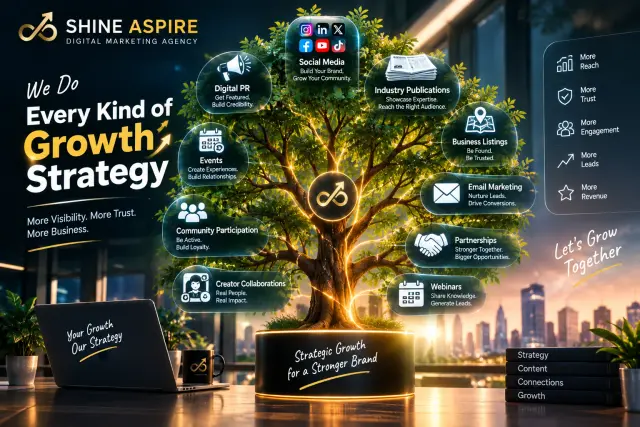
• Social media
• Digital PR
• Industry publications
• Business listings
• Email marketing
• Partnerships
• Webinars
• Events
• Community involvement
• Creator collaborations
The right mix depends on your audience. A B2B company might focus on LinkedIn industry blogs webinars and expert articles. A local consumer business may benefit more from SEO social media reviews and location-based campaigns.
11. Measure Revenue Not Just Traffic
Traffic numbers can look impressive in reports. Traffic alone doesn’t pay the bills.
Businesses should track commercial results such as:
• Organic traffic
• Qualified leads
• Conversion rate
• Cost per lead
• Customer acquisition cost
• Advertising performance
• Landing-page conversion rate
• Search visibility
• Website engagement
• Revenue tied to campaigns
The aim is to understand what drives growth. A page getting 10,000 visitors but no leads may need a different approach than one getting 500 relevant visitors who actually convert. Good analytics help businesses make marketing decisions.
How Shine Aspire Helps Businesses Build a Complete Digital Growth System
At Shine Aspire we don’t see marketing as a set of separate services. One company may need SEO. Seo by itself won’t fix a weak conversion process. Another may need Google Ads. Running ads won’t improve an ineffective landing page. A business might post regularly on media but without a clear strategy that activity may not bring real opportunities.
Our method is to look at the digital growth system and identify the biggest gaps.
SEO Services
Our SEO work can include:
• SEO
• Keyword research
• Search-intent analysis
• On-page SEO
• Local SEO
• Content strategy
• Search visibility
• Off-page SEO
• Competitor analysis
• Website optimisation
AI Search Visibility
As search behaviour changes businesses must prepare for AI-driven discovery through:
• AEO (Answer Engine Optimization)
• GEO (Google Experience Optimization)
• Answer-focused content
• AI-search-ready content
• Brand information
• Entity information
• Structured data
• Clear site architecture
We focus on creating helpful reliable information—not making unrealistic claims about guaranteed AI visibility.
Performance Marketing
Our performance marketing services include:
• Google Ads
• Meta Ads
• Campaign strategy
• Lead-generation campaigns
• Remarketing
• Landing-page campaigns
• Conversion tracking
• Campaign optimisation
Website Development
We help businesses build and improve:
• Business websites
• Service websites
• Landing pages
• Lead-generation pages
• Conversion-focused website experiences
A website should not just represent a business online. It should support the marketing and sales process.
Social Media Marketing
Our social media support includes:
• Social media strategy
• Content planning
• Organic campaigns
• Promotional content
• Audience engagement
Content Marketing
Our content services cover:
• SEO blog content
• Website copy
• Social media content
• Video ideas
• material
• Brand storytelling
• Conversion-focused copy
Branding and Digital Promotion
We also assist with:
• Brand identity
• Brand messaging
• Promotional campaigns
• Digital presence
• Online visibility
• Consistent brand communication
The key question isn’t whether a business needs every service.
The real question is:
Which combination of services will solve the actual growth problem the business is facing?
Of Asking "Which Marketing Service Do I Need?" Ask This
Many business owners start with:
“Should I hire an SEO agency?"
or
“Should I run Google Ads?"
or
“Do I need social media marketing?"
A better starting point is:
“Where are we losing potential customers?"
If people cannot find you search visibility might be the issue. If they find you but don’t contact you, your website or the conversion journey may need improvement. If ads generate clicks but not qualified leads the audience offer ad copy landing page or conversion process might need review. If people know your company but don’t understand why they should choose you positioning content proof or branding may need attention.
This way digital marketing becomes less about activities and more about building a working growth system.
Why an Integrated Digital Marketing Strategy Matters
Imagine a business, with a website but almost no visitors. The main challenge here is visibility. Now imagine another business getting lots of traffic but few enquiries. That points to a conversion problem.
Another company may get plenty of leads. Most are irrelevant. That suggests targeting, messaging, offer or qualification issues. Then there’s a business that gets customers but struggles to drive repeat purchases or referrals. That requires attention later in the customer journey.
Does one marketing activity solve every business problem. Sustainable growth usually comes from improving the parts of the customer experience and making sure they work together.
Shine Aspire Digital Marketing
SEO | AI Search Visibility | Performance Marketing | Website Development | Social Media | Content Marketing | Lead Generation
Get in touch with Shine Aspire today and discover the digital strategy your business needs to grow.
→ Start Your Digital Growth Journey With Shine Aspire
Written by Shine Aspire Team
Expert Growth Strategist