GEO Optimization: What It Is and How Indian Businesses Can Get Cited by AI

GEO optimization means making your content easy for AI tools like ChatGPT, Gemini and Perplexity to find, understand and quote. Think of it as SEO’s younger sibling. Same goal (be found), different place (inside the answer, not just in the list of links).
What is the GEO full form in SEO?
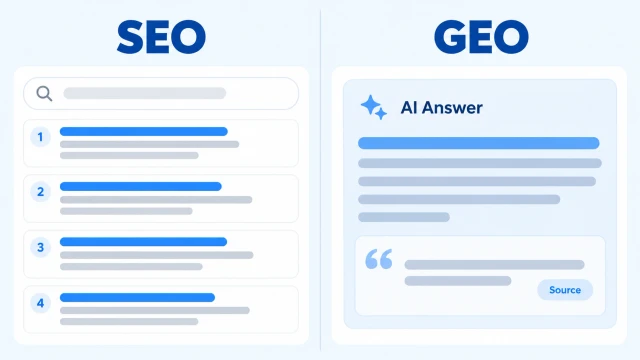
GEO stands for Generative Engine Optimization. A “generative engine” is any AI tool that writes an answer instead of just listing links.
One quick note. If you landed here looking for the NCBI GEO database used in biology, that’s a different thing. This guide is about marketing.
GEO vs SEO: what’s actually different?
- SEO helps your page rank in a list of results. The win is a click.
- GEO helps AI tools pick your content and mention your brand in the answer. The win is a mention, a citation, or a recommendation.
- What they share: clear content, trust, good site structure. If your SEO is weak, GEO is usually weak too.
So no, GEO isn’t replacing SEO. Most of the work overlaps.
Why Indian businesses should care
People here already use AI tools to shortlist things. OpenAI’s own India launch coverage put ChatGPT at over 100 million weekly users in India. When someone asks “best CA firm for startups in Chennai” or “which CRM works for a small clinic”, the answer may name three businesses. Being one of those three is the new first page.
We covered the paid side of this in our ChatGPT ads guide for India. Ads put you under the answer. GEO is about being in it.
7 practical steps to start with GEO optimization

1. Answer the question in the first two lines. AI tools pull short, clear answers. Don’t bury yours under a long intro.
2. One page, one topic. A page that tries to cover everything gets quoted for nothing.
3. Show real people and real experience. Add an author name, a short bio, real examples, photos of actual work. Generic text is easy to ignore.
4. Add structured data. Article, FAQ and Organization schema help machines understand who you are and what the page says.
5. Keep your brand facts identical everywhere. Same business name, address, phone and service description on your website, Google Business Profile, LinkedIn and directories. Mixed details confuse both people and AI.
6. Say something original. A number from your own work, a small survey, a clear opinion. AI tools tend to quote content that adds something, not content that repeats everyone else.
7. Let the crawlers in. Check your robots.txt isn’t blocking Googlebot or OAI-SearchBot. We wrote about fixing a bloated robots.txt separately.
Then there’s the part people skip: mentions outside your site. Reviews, directory listings, LinkedIn posts, local news, guest articles. AI tools learn who you are from the wider web, not just your own pages.
A 10-minute GEO self-audit
You don’t need a tool to start.
- Write 5 questions your customers actually ask.
- Ask each one in ChatGPT, Gemini and Perplexity.
- Note whether you’re mentioned, who is, and which sites they cite.
- For each gap, ask: do I have a page that answers this clearly?
- Fix one page this week. Repeat in a month.
What GEO can’t do
It can’t guarantee a mention. AI answers change by tool, by day, even by how a question is worded. Anyone promising “rank #1 in ChatGPT in 10 days” is guessing. What you can do is improve your odds, and check regularly.
Mistakes to avoid
- Writing for AI instead of people. Both lose.
- Stuffing “GEO” and “AI” everywhere. It reads badly and helps nothing.
- Ignoring your Google Business Profile and LinkedIn.
- Never re-testing. Run your audit questions monthly.
The bottom line
GEO optimization is mostly good SEO plus clearer answers, real expertise and a consistent presence across the web. Start small: fix one page, run the audit, repeat.
Want help with a GEO audit for your business? Talk to the Shine Aspire team.
Written by Shine Aspire Team
Expert Growth Strategist