If you run a business in India whether it's a textile shop in T. Nagar, a manufacturing unit in Coimbatore, or a SaaS startup in Bengaluru you've probably heard "AI automation" mentioned in every second conversation this year.
Most of it sounds like hype. Some of it is. But underneath the noise, there's a quieter shift happening: small and mid-sized Indian businesses are finally using AI tools that are affordable, easy to set up, and built for exactly the kind of problems owners deal with every day missed customer calls, slow inventory tracking, delayed invoicing, and marketing that eats time without showing results.
This post skips the buzzwords and focuses on what AI automation in 2026 looks like in practice, what it costs, and how a real Indian business used it to get measurable results.
What "AI Automation" Actually Means in 2026
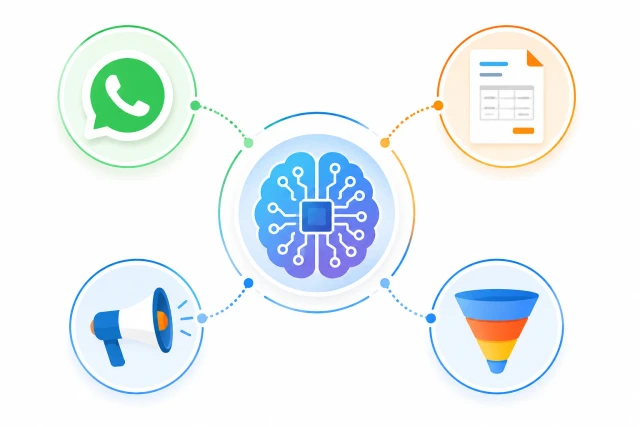
AI automation isn't one single tool. It's the use of AI-powered systems to handle repetitive, rule-based work so your team can focus on decisions that actually need human judgment. In 2026, the tools that matter most for Indian SMEs fall into a few categories:
- Customer communication — WhatsApp and voice-based AI agents that answer FAQs, take orders, and follow up on abandoned carts
- Back-office work — automated invoicing, GST reconciliation, and inventory alerts
- Marketing — AI-assisted content creation, ad targeting, and performance reporting
- Sales follow-up — lead scoring and automated reminders so no enquiry goes cold
The shift in 2026 compared to even two years ago is accessibility. These tools now integrate directly with WhatsApp Business API, Tally, and common POS systems used across Indian retail no large IT team required.
Why This Matters More for Indian SMEs Than It Seems
Indian small businesses run on thin margins and even thinner bandwidth. Owners are often doing sales, accounts, and customer service themselves. The value of automation here isn't "innovation" it's time and money recovered from tasks that were never a good use of a founder's attention in the first place.
There's also a trust dimension. Customers in India increasingly expect instant replies on WhatsApp, especially post-festive season shopping surges. A missed message often means a lost sale to a competitor who replied first.
Case Study: A Traditional Sari Retailer in T. Nagar, Chennai

A well-known sari retailer in T. Nagar — one of Chennai's busiest textile markets — was struggling with a familiar problem: their two sales staff spent hours each day answering the same WhatsApp questions about fabric availability, pricing, and delivery timelines, especially during wedding season.
What they did:
- Set up a WhatsApp AI assistant to handle catalog queries, price ranges, and store timings
- Automated order confirmations and delivery status updates
- Used AI-generated product descriptions for their online catalog, cutting content prep time significantly
Results after four months:
- Response time to customer queries dropped from an average of 6 hours to under 3 minutes
- Staff reported roughly 40% less time spent on repetitive WhatsApp replies, freeing them for in-store sales
- Online catalog enquiries converted to in-store visits increased by around 18%, based on the store's own tracking of enquiry-to-visit conversion
The owner didn't replace any staff. He redirected their time toward closing sales instead of answering "is this available in blue?" for the fortieth time that day.
What This Looks Like for a Bengaluru SaaS Startup
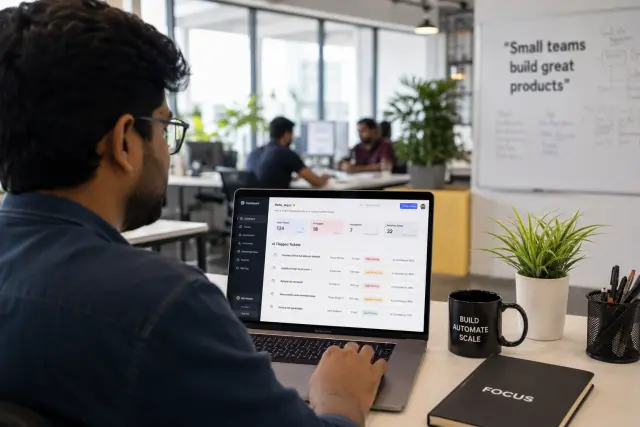
For a small SaaS team, the priorities look different. A common setup among early-stage Bengaluru startups in 2026 includes:
- AI-assisted customer support triage, routing only complex tickets to human agents
- Automated churn-risk flagging based on usage patterns
- AI-generated first drafts for sales outreach, refined by the founder before sending
The pattern is consistent: AI handles the first 70-80% of repetitive work, and a human handles judgment, tone, and final decisions.
How to Start Without Overspending
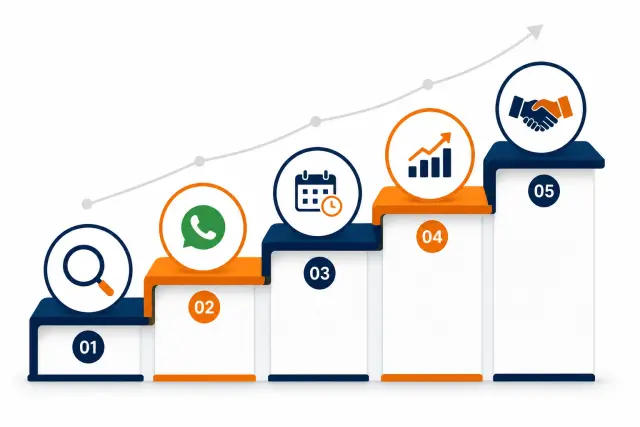
Indian business owners are (rightly) cautious about tools that promise the world and deliver a dashboard nobody opens. Here's a practical starting sequence:
- Pick one bottleneck, not five. Start with the task eating the most hours — usually customer queries or invoicing.
- Choose tools with WhatsApp or Tally integration. Anything that requires your team to learn a new interface from scratch will slow adoption.
- Run a 30-day pilot before committing to annual contracts.
- Track two numbers only — time saved and response speed. Revenue impact follows once these improve.
- Keep a human in the loop for anything involving pricing negotiations, complaints, or high-value customers.
The Honest Caveat

AI automation isn't a fix for a weak product, poor service, or unclear pricing. It amplifies what's already working and removes friction from repetitive tasks it doesn't create demand out of nothing. Businesses that see real results treat it as a time-management tool first, not a growth hack.
Final Thought
2026 is the year AI automation stopped being a Silicon Valley conversation and became a practical, affordable option for Indian shopkeepers, manufacturers, and startups alike. The businesses gaining the most aren't necessarily the most "tech-savvy" they're the ones willing to automate one clear bottleneck and measure the result honestly before scaling further.
If you're unsure where to start, look at where your own time disappears each week. That's usually where AI automation pays off first.